
What is left when the therapist walks out
7 August 2026 · 6 min read
The whole platform is built around someone running the session. The standalone version does not have that person — and most of the work went into what follows from it.
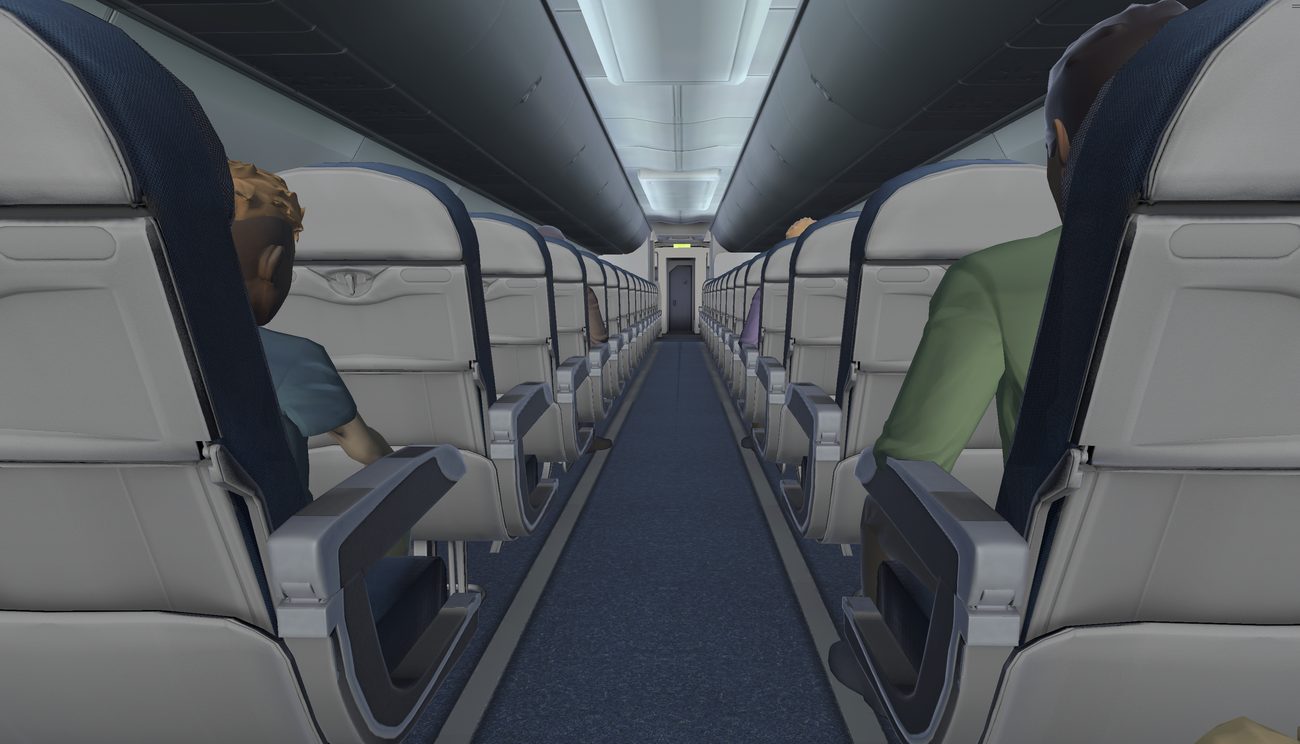
When you build VR exposure for a professional setting, the therapist is the most important part of the setup. They sit next to the client and keep intervening throughout: adding people to the carriage, starting turbulence, asking for a distress rating, switching the environment. What they do not have on their screen is the view from the headset — they get scenario state, its settings and the event log. The rest they read off the person sitting beside them. The scenario decides nothing on its own.
The standalone version removes that role. It is the same application, only with no dashboard behind it: it runs on the headset alone, because it is headed for a store where no therapist will be present.
Only when you take the therapist away do you notice how much they were doing. They set the pace. They knew when the client was ready to move on. They said “that's alright, you can stay here as long as you like” — and it mattered that a person said it.
What the app does instead
A phase of a scenario is a scripted sequence: voice, a breathing exercise, pauses. When the sequence runs out, the app does not move you on by itself — it raises a prompt asking whether you want to continue, and waits. Until you confirm, you stay where you are.
It sounds like a detail, but it is the only place where progress is decided, and we deliberately left it with the person. The tempting alternative is to measure how long you have been standing in a phase, add up your answers and move you along. But if the app pushes and the person does not want to go, they take the headset off and never put it back on. Nothing is solved and one attempt is gone.
The watch
Control sits on a virtual watch on the left wrist. The button is not clicked but held — in a headset that is more reliable than a click and cannot be triggered by accident. The watch is what confirms moving to the next phase, and what takes you back to the menu.
Learning to use it is a separate lesson in the tutorial that precedes the standalone version. A small light companion guides you through it — the same companion that replaced an earlier design where everything was operated by buttons on the watch itself.
The app knows nothing about you
There is one more thing worth saying out loud. The standalone scenario is the same for everyone. It does not track how you are doing and adapts to nothing — voice, breathing and timing all run off a fixed outline from start to finish. The only things left to you are the difficulty level you pick at the start, and how long you stay in each phase.
In the therapist-led version that role belongs to them: they ask, they watch, and they adjust what happens accordingly. The standalone version has nobody behind it, and it does not pretend otherwise.
You could argue the app ought to react. But recommending a next step from what you measure about a user is not the same as congratulating them on a phase they got through, and for an application meant to reach a store uncertified, as a self-care tool, that difference matters. So the app pushes nobody anywhere — and it has no way to.
Credit has to come from somewhere
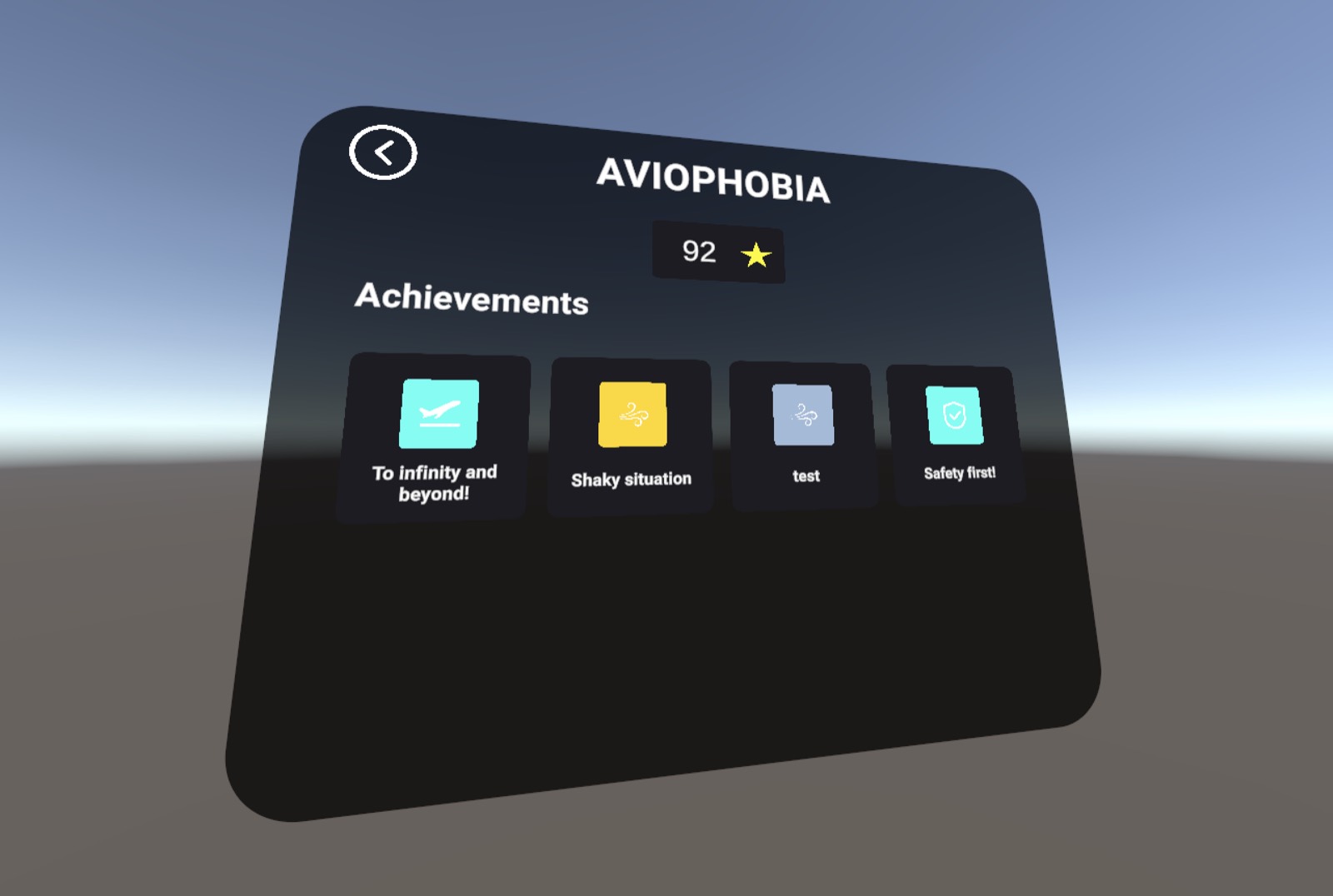
From the pilot with therapists we knew that stars and awards for getting through a situation work, and not as a game mechanic. The clinical evaluation of the pilot puts it precisely:
The graphical awards were not merely a game element — they were explicit recognition that the patient had handled a situation both of them had known in advance would be hard.
The key word is both. In a real session that recognition comes from a person who was there. In the standalone version nobody is there, and it still has to come from somewhere. So it comes from the app — knowing full well that this is a weaker substitute, not an equal one.
Where the line is
The standalone version has no dashboard and nothing leaves it — no account, no sign-up, no server. It does remember your progress, though: the headset's own storage keeps whether you have finished the tutorial and which phase you last started from. It goes no further than the headset.
And it is not therapy. It is a self-care and discomfort-training tool — which is not legal cosmetics. Therapist-led exposure has someone watching the client who knows what to do when it does not go to plan. The standalone version has nobody like that. So it has to be more careful and promise less.
The showcase application is a self-care and discomfort-training tool. It is not a medical device, does not serve for diagnosis or treatment, and is not a substitute for professional care.